
Greg Mansfield
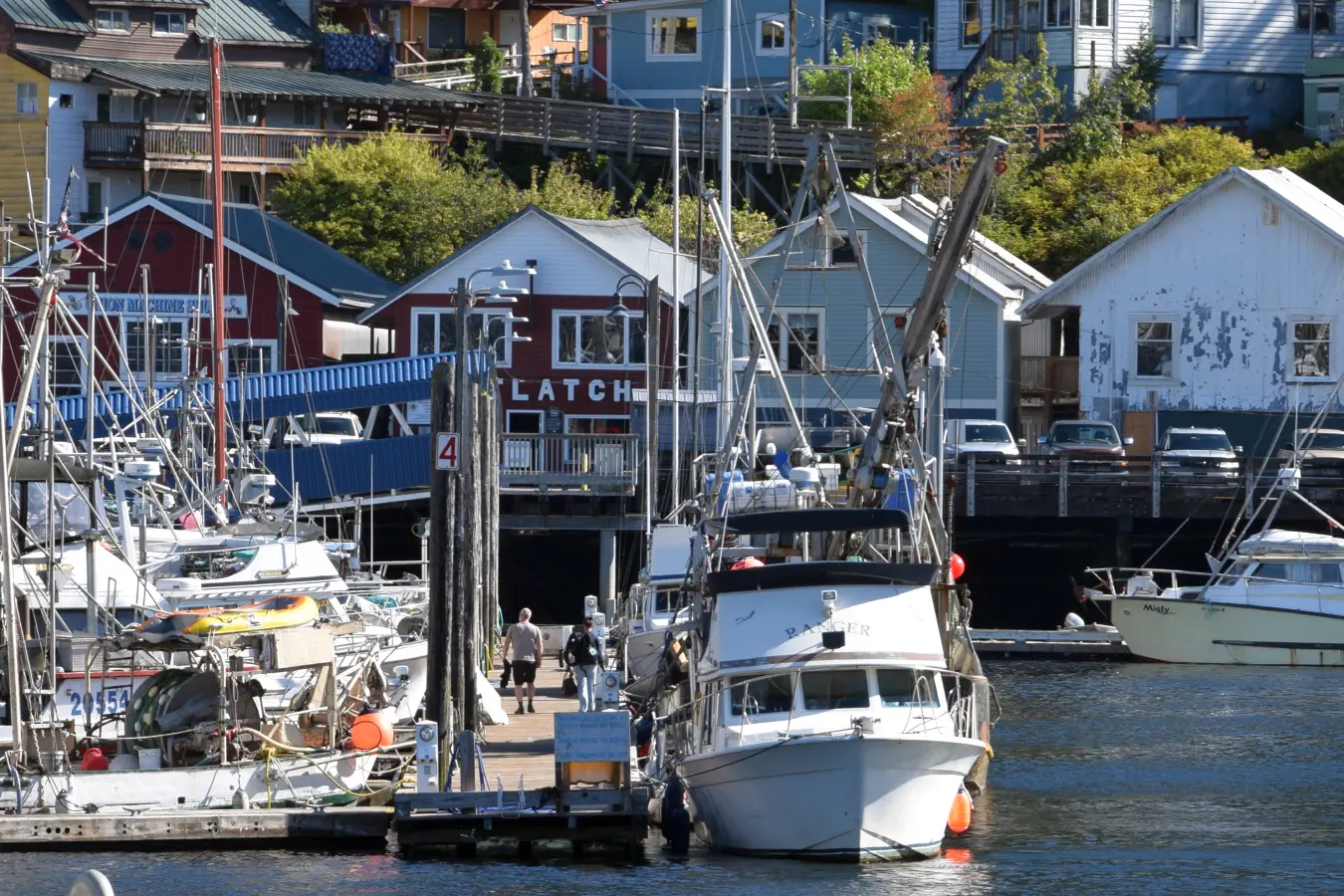
Image by Greg Mansfield
Mist rolls off the mountains and settles over Revillagigedo Island in Alaska, blanketing the town of Ketchikan in a fog that can linger for days. Some call it the “Salmon Capital of the World” and Alaska’s “First City,” and both titles fit. But long before cruise ships lined up along the waterfront, the Tlingit people fished, traded, and built their lives here for more than 10,000 years. They called this place Kichxáan, and their legends tell tales of strange creatures inhabiting the region.
They called this place Kichxáan, and their oral traditions carry some of the region’s oldest tales of shape-shifters and creatures that defy explanation.
Everything changed when prospectors, loggers, and entrepreneurs poured into the region during the late 1800s and early 1900s. Salmon canneries ran day and night. Crews cut timber deep in the nearby Tongass National Forest. Gold rush money flowed through town, and Ketchikan grew into a rough-edged frontier boomtown almost overnight.
Look past the fishing boats and the snow-capped peaks, however, and you’ll find a darker story. Fires tore through the waterfront. Ships sank. Bootleggers ran liquor past federal agents during Prohibition. And a red-light district thrived in plain sight for decades.
Ask any longtime resident and they’ll say this: many of the miners, madams, sailors, and loggers who built this town never really left.
But Ketchikan’s mysteries don’t stop at ghost stories. Head into the thick, foggy forest surrounding the town, and locals will tell you about something large and hairy moving through the trees. Look out toward the water or up into the sky on the right night, and you might see something even stranger.
Restless spirits, unexplained creatures, and UFOs all have a place in Ketchikan’s paranormal lore, and all three are very much active today.
Creek Street
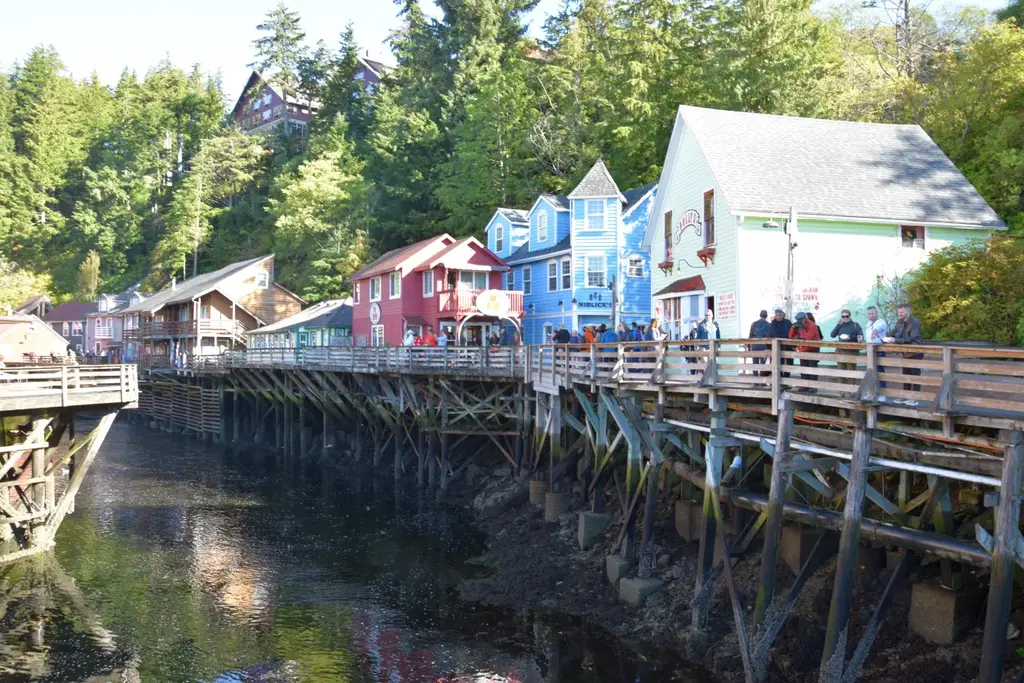
Image by Greg Mansfield
We start our paranormal tour at Creek Street, a boardwalk built entirely on stilts above Ketchikan Creek. You’ll encounter hundreds of tourists here during the summer high season, especially when cruise ships are docked. So, hit your patience button because no trip through Ketchikan’s haunted history should skip this part of town.
In 1903, Ketchikan’s city council banned brothels from the downtown core. Madams and businessmen responded by building their houses out over the creek instead, in an area then called “Indian Town.” For the next fifty years, Creek Street operated as the city’s legal red-light district. The city finally outlawed prostitution in 1953, and the last naughty house shut its doors in 1954.
During Prohibition, more than 30 brothels lined the boardwalk. To keep the liquor flowing without tipping off federal agents, many houses had trap doors built into their floors. Bootleggers rowed small boats beneath the stilts at high tide and passed bottles up through the floor.
When police raided Creek Street, customers bolted up a steep forest trail behind the buildings. This path earned the nickname “Married Man’s Trail” for obvious reasons. Not every visitor got off so easy. Rowdy clients who crossed the wrong bouncer sometimes went straight out through the trap doors and into the freezing creek below. Ketchikan Creek has always had its share of dead salmon and dead bodies.
Dolly’s House Museum
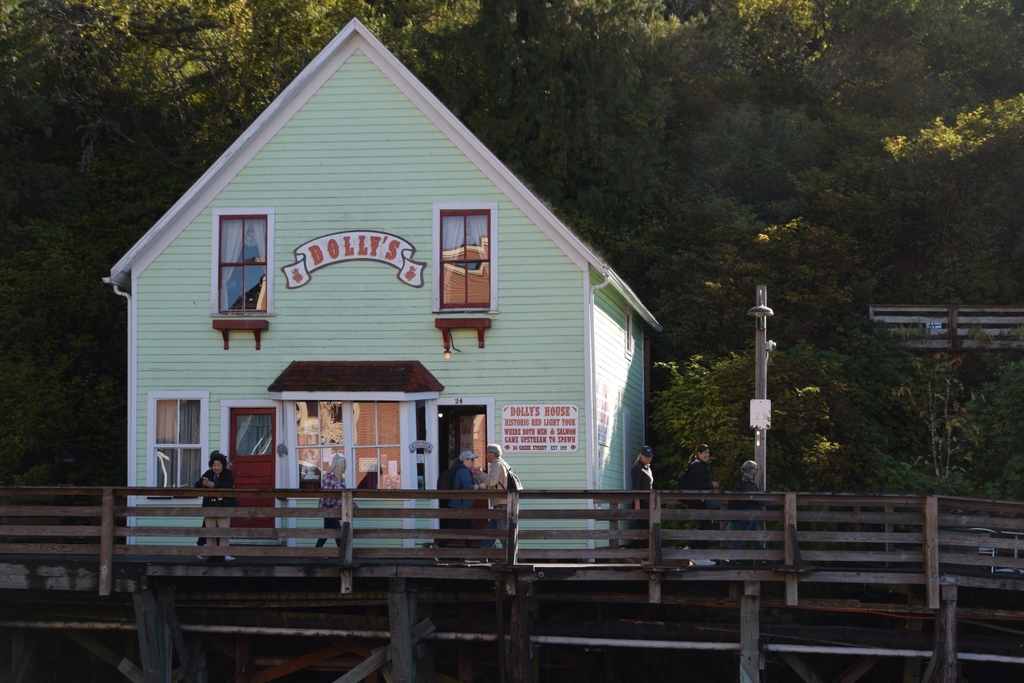
Image by Greg Mansfield
Location: 24 Creek Street, Ketchikan
Open: Daily, 8:00am – 4:00pm
Admission Fee: Yes
Website: alaska.org/detail/dollys-house-museum
Walk to 24 Creek Street and you’ll find a bright green and white clapboard building — the only Creek Street brothel still standing in its original form.
Dolly’s House once belonged to Dolly Arthur. Born Thelma Ida Woods, Dolly was Ketchikan’s most famous madam. She arrived in town in 1919 and ran her business here until the 1940s. She served loggers, miners, and fishermen who wanted company after long stretches in the wilderness.
Today, the house operates as a self-guided museum, kept almost exactly as Dolly left it. Pay ten bucks cash and you can walk through her personal rooms, see the original 1920s cabbage-rose wallpaper, and view her belongings. These include condoms still pinned to the shower curtain and the hidden floor closet where she stashed liquor during Prohibition.
Staff and visitors say Dolly never really moved out. Caretakers describe a heavy, old-fashioned feeling in the air after closing time. Shadows drift across the cabbage-rose wallpaper with no clear source, and the sweet scent of Dolly’s perfume sometimes fills a room out of nowhere.
Some people walking the boardwalk on foggy evenings swear they’ve seen a translucent man standing near the front door. Is he the ghost of a customer trying to find his way back in to visit Dolly?
Beatrice Greene’s House
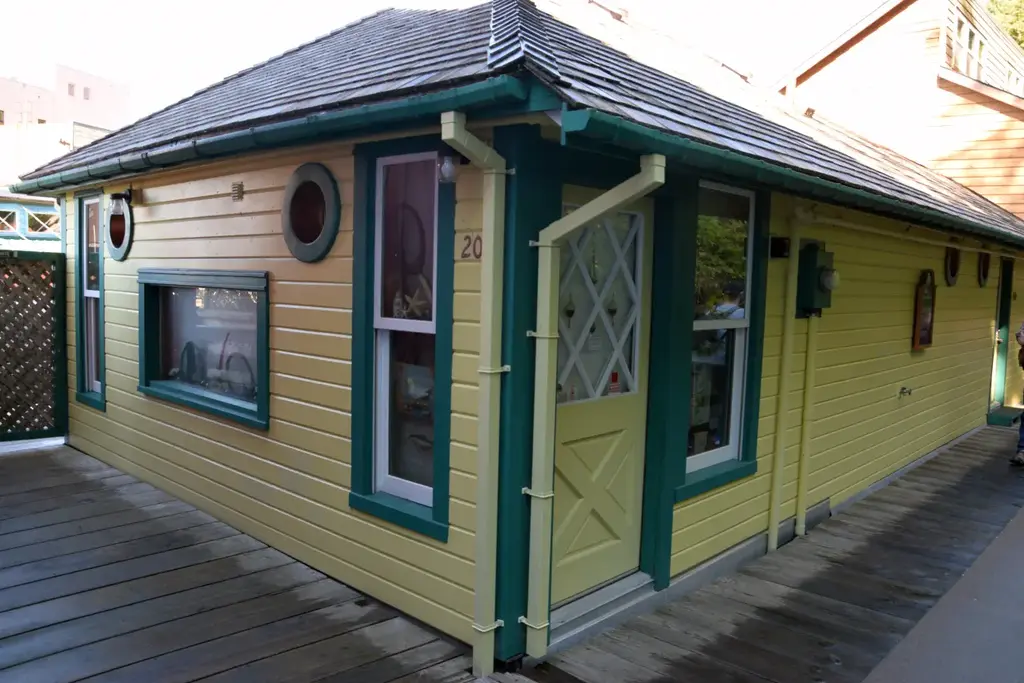
Image by Greg Mansfield
Location: 20 Creek Street, Ketchikan
Open: No; private residence
Admission Fee: N/A
Website: N/A
Another Creek Street stop worth a quick visit is the former home of Beatrice Greene. Beatrice ran her business in this location from 1947 until well after the city outlawed brothels in 1953.
The current residents have lived alongside Beatrice’s spirit for more than two decades. By their account, she’s a friendly ghost. She likes to hide keys, slide small objects across the counter, and flip lights and televisions on and off. They’re playful pranks rather than anything sinister.
The Star Building
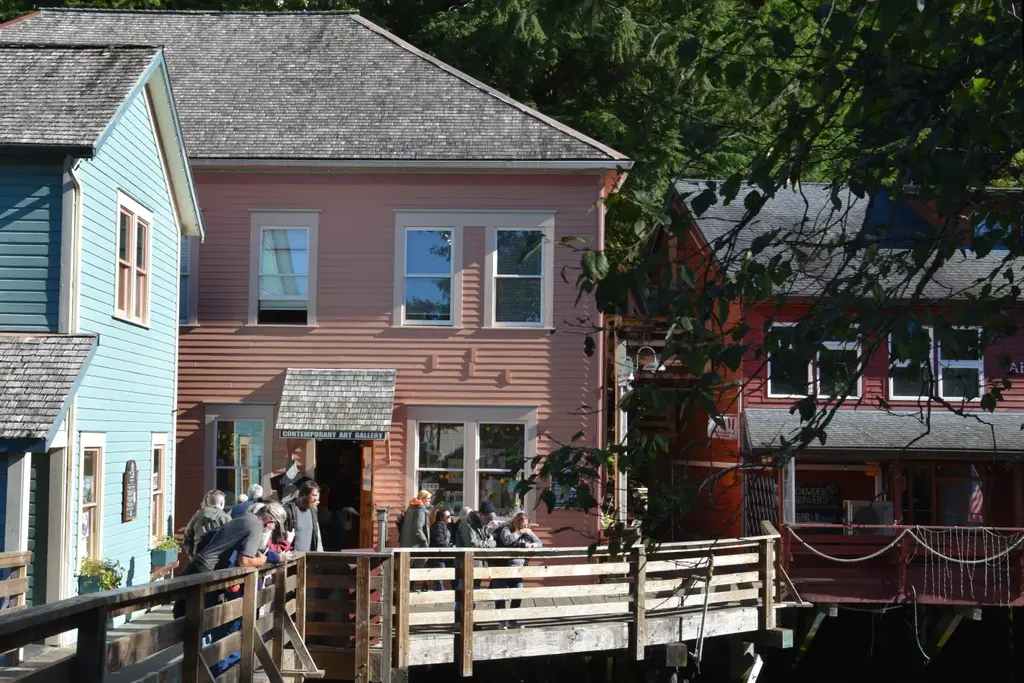
Image by Greg Mansfield
Location: 5 Creek Street, Ketchikan
Open: The Star (Art) Gallery is open daily, various hours
Admission Fee: No, it’s a retail space
Website: evonzerbetz.com/stargallery & creekstreet.com/star-room
At the top end of the boardwalk, The Star Building is one of the largest structures on Creek Street. Builders first raised The Star as a simple gable-roofed brothel in 1903, then expanded it twice — in 1910 and again in 1917 — adding an upstairs dance hall.
The building takes its name from a maple star set into the center of that dance floor. In 1917, a former Petersburg madam known as “Black Mary” bought the place for $4,000. Before Dolly Arthur opened her own house on Creek Street, she actually worked for Mary here.
Failing health forced Mary to sell in 1924, and Thelma Baker (born Linda Ruth McCowan) took over. Baker ran The Star through Prohibition and the Great Depression, pulling in steady income from visiting fishermen. Brothels paused during World War II and shut down for good in 1953, but Baker kept living in the building alone.
Then, on August 7, 1972, an oil stove in her apartment sparked a fire. Baker, then 80 years old, died in the blaze along with her dog.
The building sat empty for nearly twenty years until Steve Reeves and Karen Wolfred restored it in 1991, saving the original maple floor in the process. It now sits on the National Register of Historic Places, with an art gallery on the ground floor and a luxury suite upstairs.
Guests staying in the upper suite report cold spots that drift through the rooms and faint whispered conversations when no one else is around. Most often, they hear a woman’s voice, clear and disembodied, calling “Hello?” into the empty hallway late at night.
The Gilmore Hotel and Annabelle’s Bar
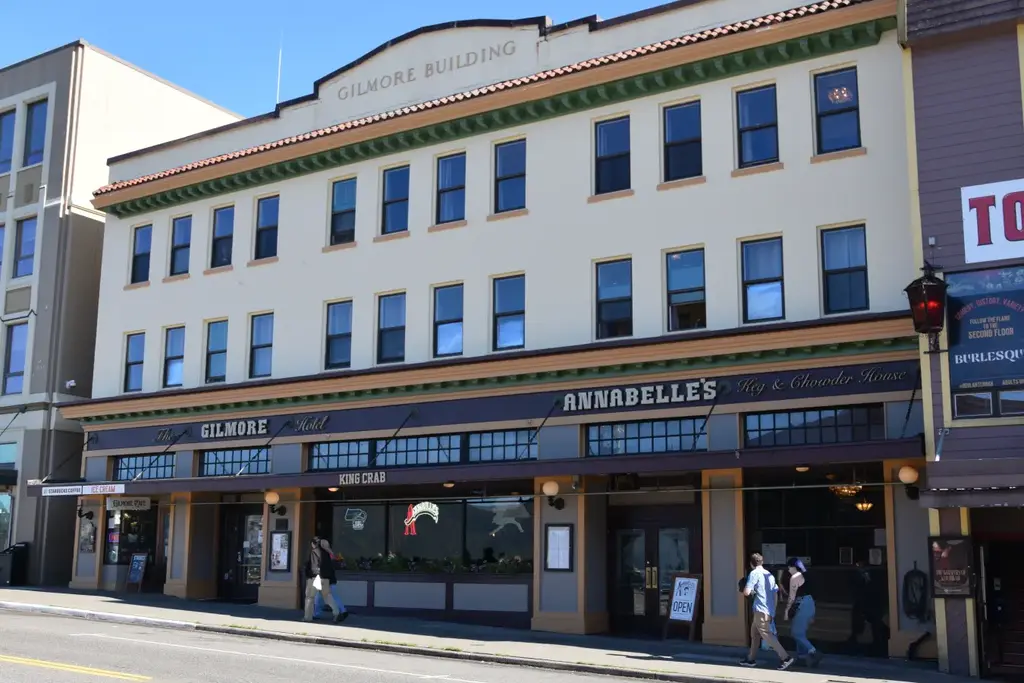
Image by Greg Mansfield
Location: 326 Front Street, Ketchikan
Open: Daily
Admission Fee: No, it’s a hotel and bar
Website: wyndhamhotels.com/trademark/ketchikan-alaska/gilmore-hotel-trademark-collection/overview
Head to Front Street in the heart of downtown and you’ll find The Gilmore Hotel, one of Southeast Alaska’s most active paranormal hot spots.
Pat Gilmore, an Irish immigrant who became a judge, city councilor, and eventually mayor, built the hotel in 1927. A fire had just swept through Front Street and destroyed much of the waterfront, so Gilmore made sure his new building was fireproof, designing it in concrete in the Early Commercial style.
For much of the twentieth century, the Gilmore hosted businessmen, cannery workers, sailors, and miners passing through town. A major restoration in 1989 earned it a spot on the National Register of Historic Places.
Downstairs, Annabelle’s Famous Keg and Chowder House serves food in a wood-paneled dining room that’s considered one of the most haunted bars in the United States. Staff have watched heavy glass chandeliers swing back and forth in perfectly still rooms, with no draft, no explanation. Doors open and slam shut with nobody near them.
In the hotel, more than one employee has heard a woman singing behind the plaster walls, especially near Room 303 where a long-term resident once reported hearing voices at night.
Two full-bodied apparitions show up again and again on the upper floors. Guests in Room 208 describe a well-dressed man in a top hat, sometimes sitting quietly in a chair, sometimes pacing with a cigar in hand. Elsewhere, a silent woman in a white dress appears sitting in guest rooms or staring out toward the harbour before fading away.
Room 208 has the strongest reputation for paranormal activity in the whole building. Guests who sleep there sometimes wake in the dark with the unsettling feeling that they’re floating above the mattress.
One of the hotel’s strangest stories involves a Coast Guard officer who stayed the night and mentioned at checkout that he’d heard strange noises coming from the room next door the night before. When the front-desk clerk unlocked the neighbouring room to check, they found the bed soaked through with what looked like fresh blood. Nobody had been booked into the room, which left the incident shrouded in mystery.
One of the hotel’s strangest stories involves a Coast Guard officer who stayed the night without incident, until the front desk clerk asked him the next morning if he’d heard anything odd next door. The room had been locked and empty all night. When the clerk opened it, the bed was soaked through with what looked like fresh blood. No one ever found a source or a record of any injury.
Tongass Trading Company
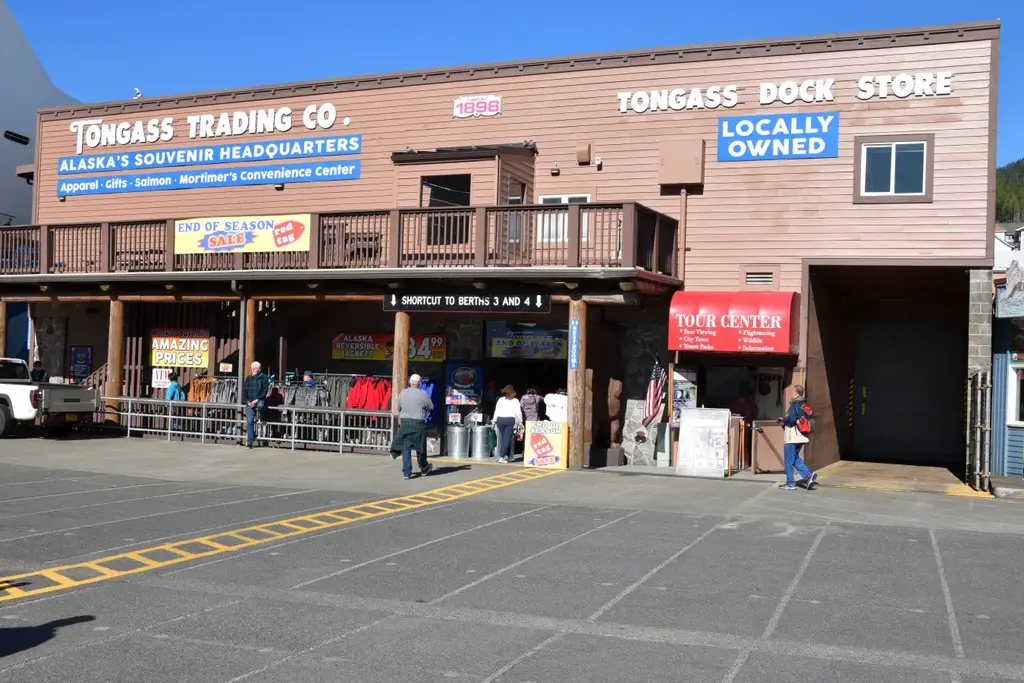
Image by Greg Mansfield
Location: 201 Dock Street, Ketchikan
Open: Daily, 8:00am – 5:00pm
Admission Fee: No, it’s a store
Website: tongasstrading.com
Near the waterfront you’ll find Tongass Trading Company, Alaska’s oldest continuously operating retail store. The building sits on the site of a former frontier hotel, and for generations it has served seafarers, miners, and travelers passing through town. But alongside the souvenir displays and busy aisles, the store carries a long history of strange, unexplained activity.
Employees working during quiet off-hours have documented one eerie encounter after another over the years. Heavy footsteps echo across locked, empty rooms upstairs. Merchandise slides across shelves on its own, untouched by any visible hand.
The strangest reports come from staff members who strike up casual conversations with a coworker in the aisles, only to turn around and find no one there at all.
Whether these are the spirits of long-forgotten hotel guests who never checked out, or something else entirely from Ketchikan’s past, Tongass Trading Company remains one of the First City’s most talked-about haunts.
The OutPost
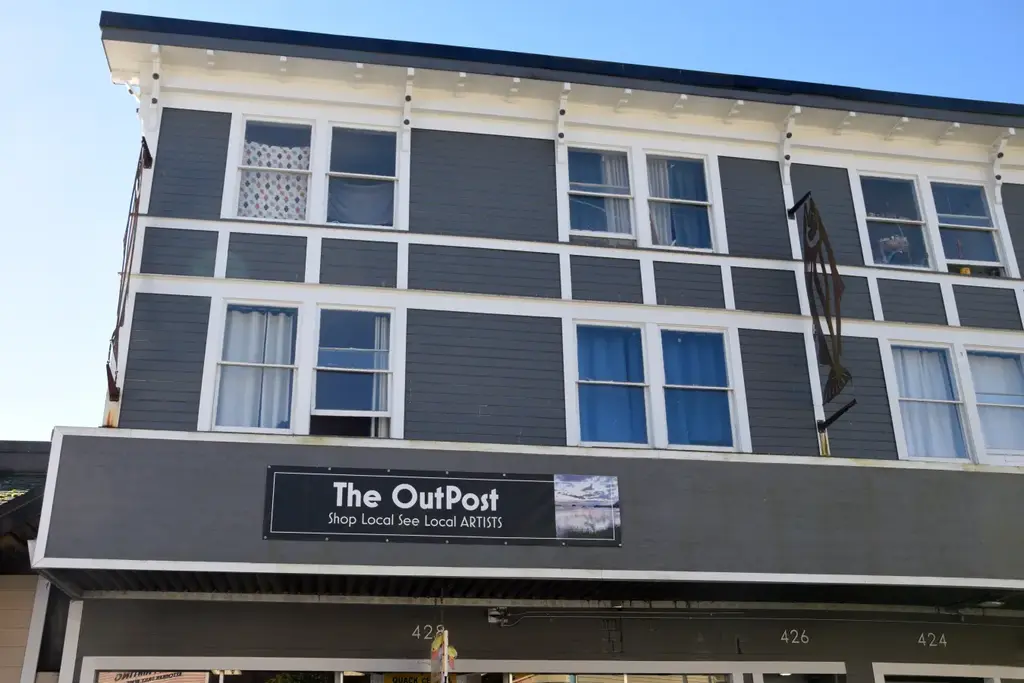
Image by Greg Mansfield
Location: 428 Mission Street, Ketchikan
Open: Daily, various hours
Admission Fee: No, it’s a store
Website: facebook.com/theoutpostktn/
Long before it became a retail store, The OutPost building served a very different purpose — housing a religious mission school for local children during the town’s early frontier days. The building eventually turned into a commercial outlet, but the energy from its schoolhouse years seems to have lingered.
Employees working late shifts after closing have shared many chilling accounts. Staff on the main floor or in the basement often hear footsteps running across the floorboards upstairs and children’s laughter drifting through empty rooms when no one else is in the building.
More than once, workers have rushed upstairs certain that an intruder had broken in, only to find the doors locked and the floor completely empty. The activity became so persistent — staff members described it as a constant game of chasing invisible, mischievous pranksters — that some employees refused to work alone after hours.
Pioneer Hall
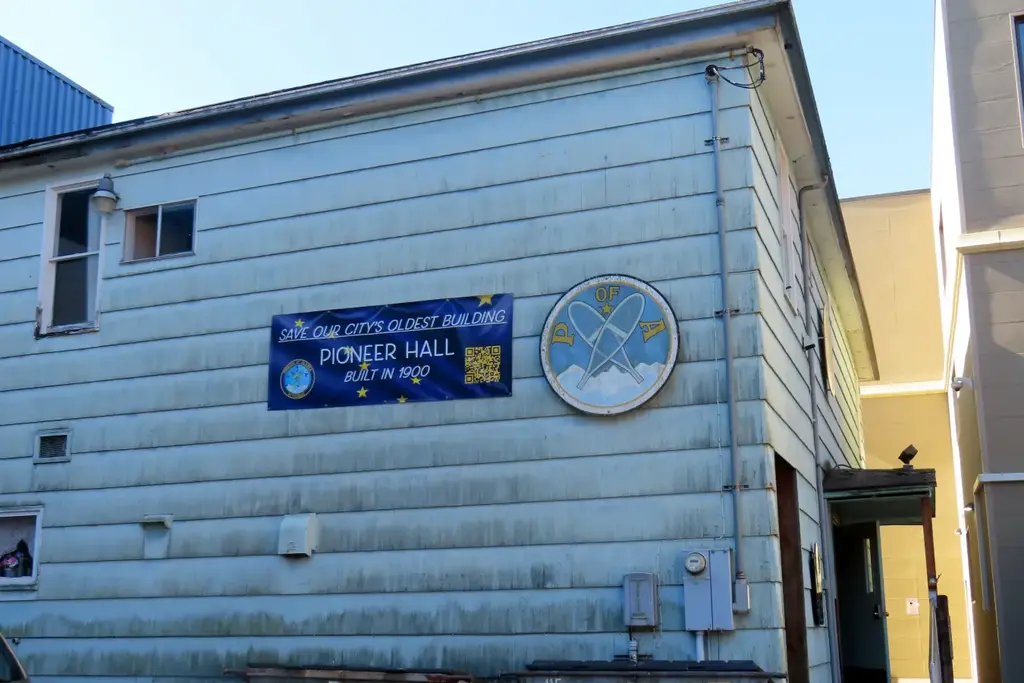
Image by Carolyn Mansfield
Pioneer Hall holds a title no other building in Ketchikan can claim — it’s the oldest standing structure in the First City.
A local frontiersman known as “Six-Shooter” Grant built the hall to serve as a government customs house. There he managed the paperwork that kept Ketchikan’s booming fishing and timber economy moving. In a town built almost entirely of wood and prone to devastating fires, the hall’s survival through more than a century is remarkable.
Grant ran his post with a firm hand, and locals say he took pride in the building he’d built. When he died, that pride apparently didn’t fade. According to longtime residents, Grant’s spirit never left this place. People who’ve worked in or visited the hall after dark describe a distinct feeling of being watched, as though someone is standing just out of sight, keeping an eye on the place the way Grant once did.
Doors that were latched shut are sometimes found open in the morning. Footsteps cross empty rooms when no one else is inside. None of it feels threatening; locals describe it more as a caretaker’s presence than a haunting. To this day, many Ketchikan residents believe Six-Shooter Grant simply never clocked out.
Beyond the Boardwalk: Bigfoot Sightings in the Tongass Rainforest
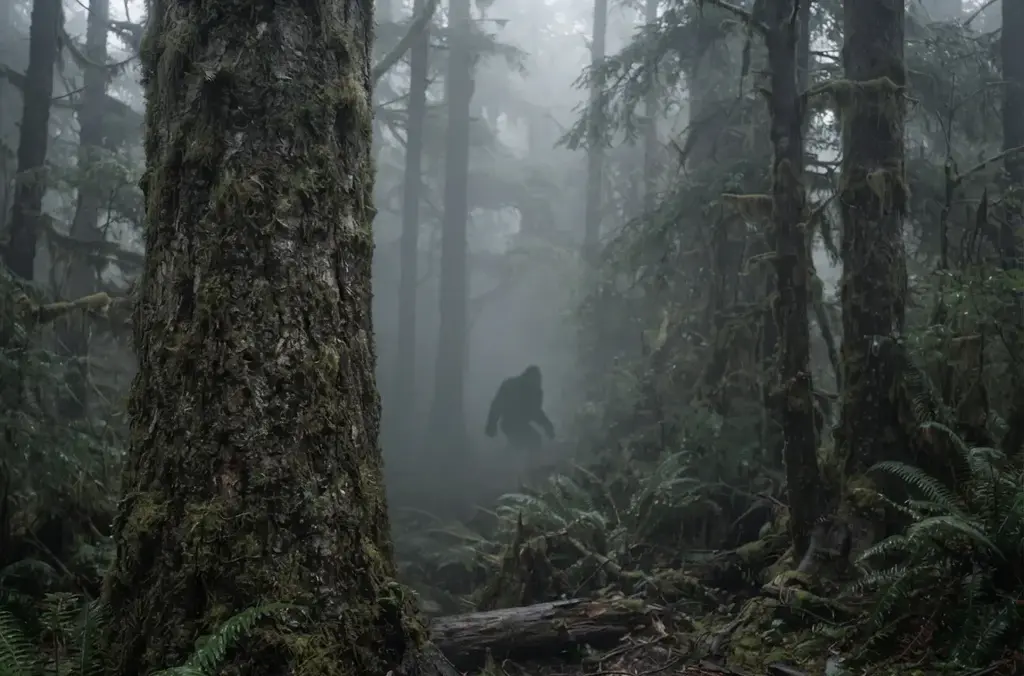
Downtown Ketchikan has a good number of haunted buildings, but the Tongass National Forest surrounding the city holds a different kind of haunting altogether: Bigfoot, or Sasquatch. And according to Tlingit tradition, Kushtaka also lives here. Kushtaka is a half man, half otter creature that mimics human cries for help to lure travelers into danger.
During Southeast Alaska’s logging boom, crews working remote camps on Revillagigedo Island and nearby Prince of Wales Island told unsettling stories about the deep woods. Loggers would return to camp and find their tools missing, only to discover them later arranged in strange patterns along the tree line.
At night, guttural screams echoed through the forest. These were loud and frequent enough that some workers quit their contracts rather than go back into the woods.
On May 10, 2011, a YouTube user named putua76 posted a video now known as the Ketchikan Bigfoot footage. Shot in the forest near town, the clip shows a grey, upright figure moving through the brush about 8 seconds in, followed by what looks like a hairy face peering through the leaves at the 23-second mark before it turns and moves away.
Sightings haven’t stayed confined to the woods, either. One Bear Valley resident, in the neighborhood just above downtown, witnessed a 6-to-7-foot creature covered in dark hair walking upright along a road before it disappeared into nearby trees.
Other people have reported similar encounters near Ward Lake, Signal Creek, and Last Chance Campground — all popular local recreation spots.
UFOs and Strange Lights Over the Alaska Triangle
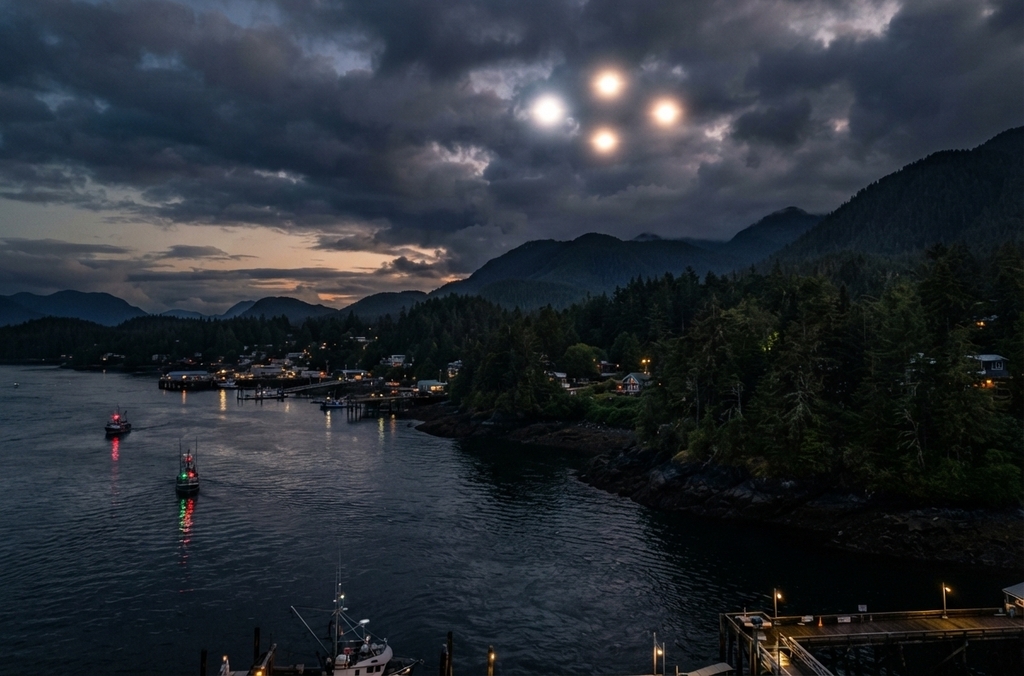
Most conversations about Ketchikan’s paranormal side focus on restless spirits and giant figures in the woods. But look past the dense forest where Bigfoot roams, and you’ll find a different kind of mystery that plays out in the sky and deep coastal waters. Ketchikan sits inside the so-called “Alaska Triangle”, and locals have their tales of UFO, or UAP, sightings to go with it.
Witnesses describe disc-shaped craft with a molten, metallic look, glowing orbs that hover and dart without warning, and silent geometric shapes that pull off flight maneuvers no known aircraft can match before disappearing at incredible speed.
Some believe these sightings tie to classified military activity. Local lore and independent investigators often connect them to nearby underwater testing ranges and US Navy submarine installations situated nearby along the coast. Believers in this theory point to a broader pattern of UFOs showing up near military bases connected to nuclear weapons, and they see Ketchikan’s Navy ties as a likely reason the area draws so much activity.
This theory splits into two camps. Some witnesses describe glowing objects diving into the ocean and vanishing beneath the surface, which has led some to speculate about alien bases hidden deep in the cold waters offshore. Others take a more grounded view, suggesting the objects are advanced military aircraft running classified maneuvers rather than anything otherworldly.
Government craft, natural phenomena, or something else — whatever the explanation, these sightings reveal that Ketchikan’s mysteries reach well past haunted buildings and unknown creatures inhabiting the forest.
Experience Mysterious Ketchikan for Yourself
Few towns pack as much paranormal punch as Ketchikan does. Walk its streets after dark and you’re just as likely to feel a cold spot near an old brothel as you are to hear a story about unidentified lights over the water.
Creek Street and the Gilmore Hotel hold onto the ghosts of the people who built this town: madams, loggers, sailors, and miners whose presence still lingers in the old wood and plaster.
Head into the surrounding Tongass National Forest, and the stories shift from restless spirits to something wilder — Bigfoot sightings, Kushtaka legends, and screams in the dark that have sent grown loggers running.
Look up, or out toward the water, and the mystery changes shape again. Decades of UFO sightings tie Ketchikan into the wider legend of the Alaska Triangle.
Whether you come as a skeptic drawn by the area’s history or a true believer chasing every strange story you can find, this town delivers.
Planning a visit? Nightly guided walking tours, like the Ketchikan Ghost Walk, which departs from “The Rock” waterfront sculpture at 210 Front Street, will take you around the historic, haunted spots after dark.