By Greg Mansfield
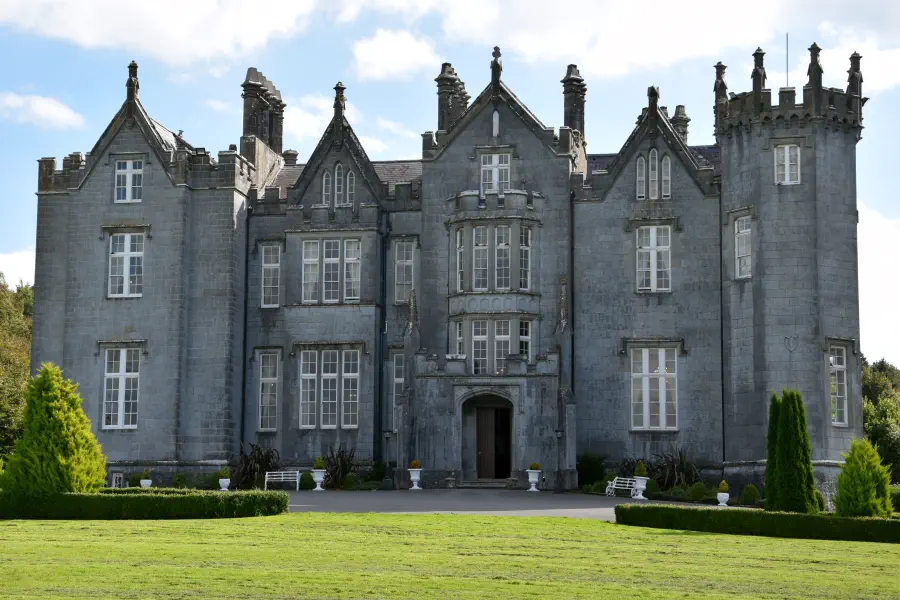
Image by Greg Mansfield
In the Counties of Offaly and Tipperary, castles rise from rolling green hills and dense woodlands. This quiet corner of Ireland holds more than scenic beauty and medieval history, however—it has some of the Emerald Isle’s most actively haunted places. County Offaly is home to a trinity of castles with ghosts: Charleville Castle, Kinnitty Castle, and Leap Castle. Together with Lackeen Castle in County Tipperary, they make central Ireland one of the most notoriously haunted regions in the country.
Haunted Places in Central Ireland
Charleville Castle
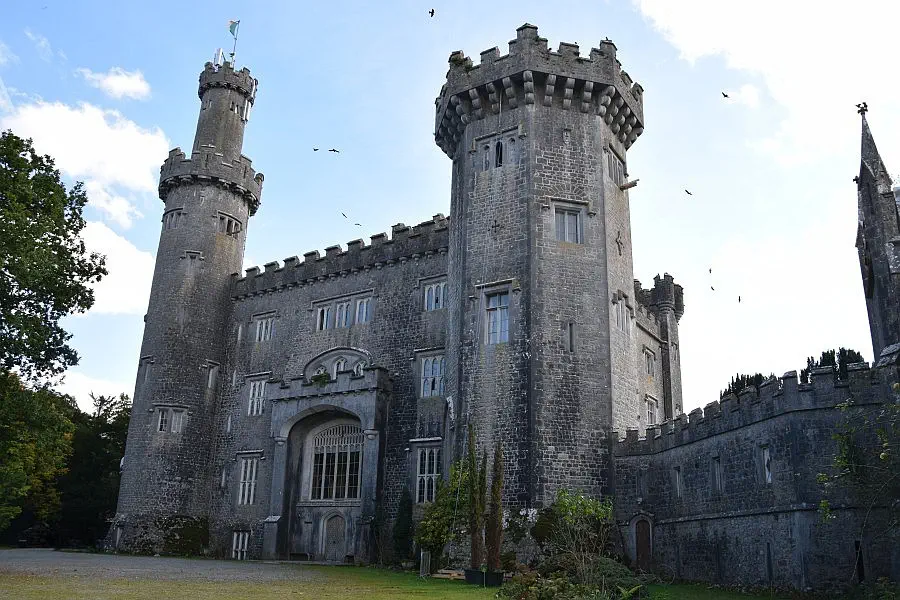
Image by Greg Mansfield
Location: Charleville Demesne, Tullamore, County Offaly
Open: By appointment (see website)
Admission Fee: Yes
Parking: Free parking
Website: charlevillecastle.ie
In the heart of County Offaly’s ancient oak forests stands Charleville Castle, an imposing Gothic structure that would be a perfect location for an old-school horror movie. When my wife and I drove along the long, forested driveway and arrived at the castle, a murder of crows circled and shrieked above its tall towers. It felt like an ominous warning.
Pass through Charleville’s gates, and you’re stepping onto land steeped in mystery. Long before the current castle rose, the grounds belonged to the ancient monastery of Lynally. Even earlier, Irish Druids chose these woods for their sacred rituals back in the 6th century.
Some visitors believe the castle’s paranormal activity stems from something even more unusual. The building allegedly sits directly on a leyline—an invisible line of earth energy that some think attracts supernatural phenomena.
The story of Charleville Castle began in 1577, when Queen Elizabeth I gave 1,700 acres to the Moore family. However, the Gothic mansion you see today came much later. In 1798, Charles William Bury, the Earl of Charleville, decided to build this extraordinary, turreted tower house.
Working from sketches by his talented wife, Lady Catherine Maria Bury, the Earl hired Sir Francis Johnston to bring their vision to life. Johnston was Ireland’s premier architect at the time, famous for designing Dublin’s General Post Office. Construction took fourteen years, finishing around 1812–1814. Today, experts consider Charleville Castle the finest example of Gothic-revival architecture in all of Ireland.
Standing tall on the castle grounds is the King Oak, a massive tree that has witnessed nearly 900 years of history. According to local legend, whenever a branch falls from this ancient oak, a member of the Bury family dies soon after. This prediction proved true in 1963. Lightning struck the King Oak that year, splitting it nearly in half. Shortly afterward, Colonel Charles Howard-Bury, the last surviving family member, passed away.
After the Colonel died, the castle entered a period of decay. No one lived there after 1912 and, by 1968, owners had removed the roof to avoid paying property taxes. Fortunately, restoration work began in the early 1970s. The Charleville Castle Heritage Trust continues to toil tirelessly to preserve the building.
Paranormal investigators make pilgrimages to Charleville Castle year after year. The location has appeared on popular television shows including Most Haunted, Scariest Places on Earth, and Ghost Hunters International. But what makes this castle so special to ghost hunters?
The most heartbreaking story belongs to Harriet, an eight-year-old girl who loved to play in the castle’s grand halls. In April 1861, tragedy struck when Harriet climbed onto the main staircase’s banister. She wanted to slide down, just like many children do. Instead, she fell, breaking her neck instantly.
Harriet never left the castle. Visitors walking up the main staircase often feel a sudden bone chilling cold spot in one particular place. Many hear a young girl singing or laughing. Others report hearing screams echoing through the halls.
Some guests see Harriet. She appears as a little girl wearing a blue and white dress, her golden curls bouncing as she moves. True to her playful nature in life, Harriet still loves games. She particularly enjoys hide-and-seek and has been known to lock people in rooms as a prank.
Harriet isn’t alone. Witnesses describe seeing a small boy accompanying her. One family who lived in the castle reported that their young son felt protected by both a girl and a boy who watched over him on the stairs.
The building hosts numerous other ghosts and unexplained phenomena. One former resident’s mother got the shock of her life in the tower room. She woke to find her bed surrounded by ghostly monks and figures draped in red cloaks. The spectres appeared to be blessing her before they vanished.
The castle contains a certain gallery that stays permanently locked. Staff and investigators warn that a hostile spirit guards this area. Unlike the playful Harriet, this entity reportedly threatens anyone who tries to enter its domain.
Throughout the castle, people hear voices with no visible source. Footsteps echo down empty corridors. One witness even reported seeing green mist seeping out of a bedroom wall.
Charleville Castle opens its doors to brave visitors who want to experience its rich history and paranormal activity firsthand. The castle hosts special “fright nights” for those seeking a truly immersive ghost hunting experience. No matter when and how you want to visit, you must contact The Charleville Castle Heritage Trust in advance to make arrangements.
Whether you come for the spooky Gothic architecture, the fascinating history, or the chance to encounter spirits, Charleville Castle delivers an unforgettable experience. Its halls echo with footsteps and cries from the past. And somewhere in the castle, Harriet waits to play.
Kinnitty Castle
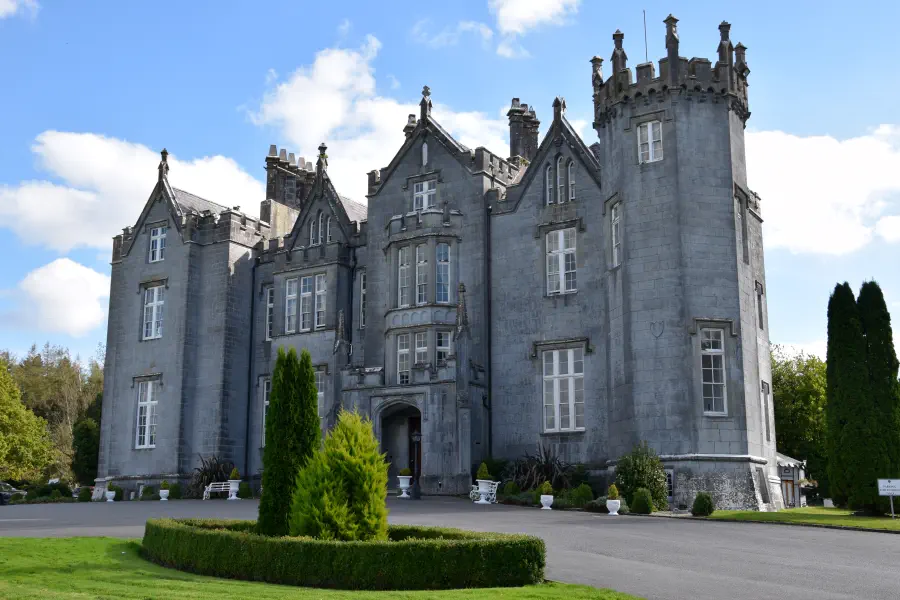
Image by Greg Mansfield
Location: Castletown And Glinsk, Kinnitty, County Offaly
Open: Daily
Admission Fee: No, it’s a hotel
Parking: Free parking
Website: kinnittycastlehotel.com
Kinnitty Castle is a 19th-century Gothic-revival mansion located near the edge of the Kinnitty Forest. Today, it serves as a luxury hotel that welcomes guests from all over the world. But don’t let the lavish decor and hospitality fool you. This place has ghost stories to tell.
An Irish clan built the first castle here, which was destroyed in 1209. The Normans rebuilt it in 1213, and they established an Augustinian Abbey close by. You can still see the High Cross and Abbey Wall standing on the grounds today.
The powerful O’Carrolls of Ely eventually took control of the property. In 1630, with the medieval castle in ruins, William O’Carroll built a new castle near the old abbey site. This structure would become the foundation of the building that stands today.
The English confiscated the castle in 1641 during the Plantation of Offaly. This was the first attempt at colonizing Ireland through the settlement of English Protestants on land confiscated from native Irish clans. By 1664, they handed it over to Colonel Thomas Winter as payment for his military service. The Bernard family later bought the property and changed its destiny.
Lady Catherine Hutchinson married into the Bernard family and had grand visions for Kinnitty. In 1811, she hired architect James Pain to transform the 17th century castle. He turned it into the magnificent Gothic-revival building that still impresses visitors today.
Then came 1922. Irish Republican forces burned the castle during Ireland’s civil war. The government helped rebuild it in 1928, and for the next thirty years it served as the Forestry Training College. In 1994, the Ryan family purchased Kinnitty and converted it into the current 37-bedroom hotel.
Kinnitty Castle’s haunted reputation is well-earned. Several spirits call this place home, and they’re not shy about making themselves known.
The castle’s best known ghost goes by the name Hugh—a phantom monk who watches over both the castle and the abbey ruins. Staff and guests often spot him in the banquet hall and the Dungeon Bar. He appears as a tall figure wrapped in a black robe, though his face remains hidden in shadow.
Hugh is different from many ghosts in that he interacts with people. He sometimes appears solid enough to seem alive. The staff describe him as friendly and playful. He loves weddings and has a habit of hiding silverware when the mood strikes him.
Guests who stay the Geraldine Room in Kinnitty Castle’s attic regularly hear small footsteps pacing overhead. This is accompanied by a little girl’s whimpering and laughter. Some visitors have seen her as a red mist floating above their beds. She doesn’t appear alone, either. A Lady in White often accompanies her. Some believe this elegant spirit might be Lady Catherine Hutchinson herself.
The paranormal activity doesn’t stop there. Throughout the castle, guests report strange experiences. Breathing sounds fill empty rooms. Shadows slide across walls where nothing stands to cast them. Televisions switch channels on their own. And one guest in the library bar watched in shock as a candle levitated from its holder and fell, hitting the floor with a crash.
Some people trace the castle’s paranormal activity to the stone circle located near the woods behind it. Historical details about this circle are scarce, but records mention that it, or at least its centre stone, was present when the original castle was rebuilt in 1213. Some believe the centre stone served as a druid altar. If they’re right, spiritual energies older than the castle might be at work here.
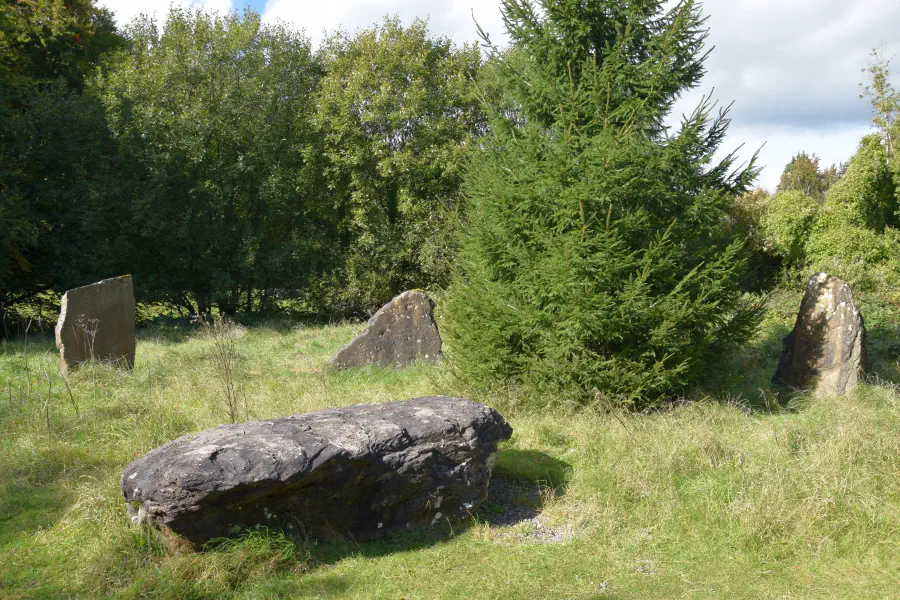
Image by Greg Mansfield
Whether or not you believe in druidic powers, leylines, and spirits of the dead, Kinnitty Castle makes people stop and wonder. Visitors come expecting old architecture and Irish hospitality. Some leave with experiences they struggle to explain.
Lackeen Castle
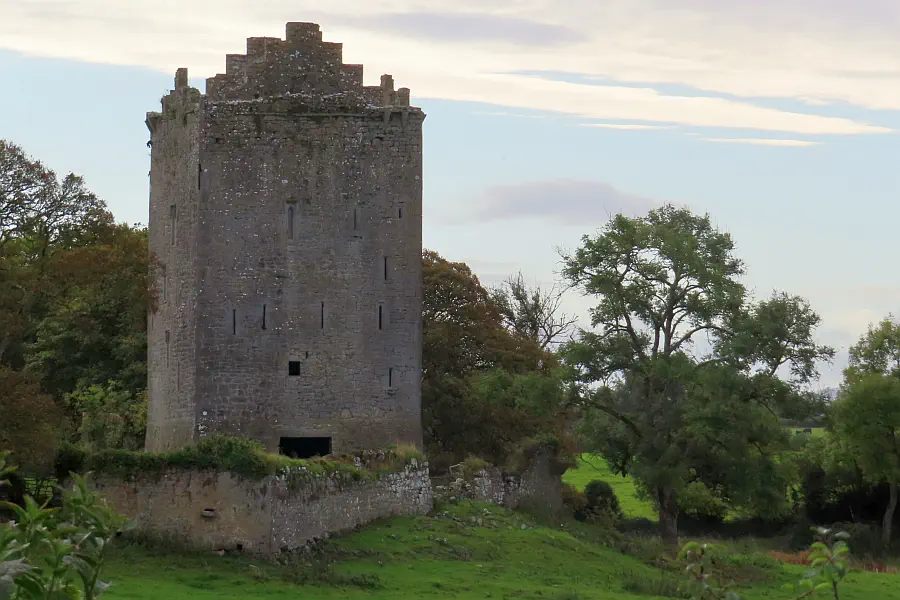
Image by Carolyn Mansfield
Location: Abbeville, County Tipperary
Open: Inaccessible; on private property, please don’t tresspass
Admission Fee: N/A
Parking: Free, at the side of the road
Website: N/A
In the farmlands of County Tipperary, near the village of Lorrha, you’ll find the crumbling walls of Lackeen Castle. It’s a national monument with stories that stretch back nearly a thousand years. And if the legend is true, something ancient and otherworldly still calls this place home.
The Kennedy clan built the first version of Lackeen Castle in the 1100s. They needed a strong fortress to protect their lands, and this tower house served that purpose well. What you see today comes mostly from a 16th-century rebuild, when the family strengthened the four-storey tower with defensive features including a murder hole and machicolation—clever features designed to enable the building’s occupants to drop stones or boiling liquids on anyone trying to force their way in.
Around 1735, workers rebuilding part of the tower made an incredible discovery. They broke through a wall and found an ancient book hidden inside. This was the Lorrha Missal, a beautifully illustrated Irish manuscript created in the late 700s or early 800s. Monks at nearby Lorrha Monastery had added notes to it in the 1000s, making it a glimpse into medieval Irish Christianity. Today, the Royal Irish Academy protects this rare manuscript.
Most haunted places house the spirits of people who once lived there or wandered in after they died. Lackeen Castle, however, is different. The entity most closely tied to these ruins is a púca—a shape-shifting creature from Irish mythology known for causing mischief and chaos.
According to the story, one of the Kennedy lords discovered a púca defending a group of old women (said to be witches) who were trying to rob a corpse. The lord captured the fairy creature and imprisoned it in Lackeen Castle. His terrified servants begged him to let it go. They feared a terrible curse that would fall on the household by keeping a púca prisoner.
The lord struck a bargain. He released the púca, but only after making it promise never to harm anyone in his family line. The creature agreed and vanished into the night. Yet local people say the púca never really left. Even now, visitors claim to see an unidentifiable figure moving through the castle grounds.
The púca isn’t alone at Lackeen Castle. Over the years, people have reported seeing a Lady in White drifting through the ruins. Some believe she was a former resident who died tragically within these walls. Witnesses say she appears briefly before fading away.
Others report hearing the clash of swords and the shouts of men locked in combat. These phantom battle sounds echo through the empty castle, even though no one’s there.
In May 2023, paranormal researchers recorded an EVP (Electronic Voice Phenomenon) of a disembodied voice saying “Help me”. The year before, in August 2022, investigators captured a strange photograph. It appears to show a figure staring out through one of the barred windows. Could this be the púca, looking out from its ancient home?
Lackeen Castle stands at the crossroads of Irish history, folklore, and the paranormal. In addition to being the Kennedy clan’s old fortress, the hiding place of a precious medieval manuscript and the legendary prison of one of Ireland’s most famous mythical creatures, it’s an active haunted location where the dead refuse to stay buried.
Leap Castle
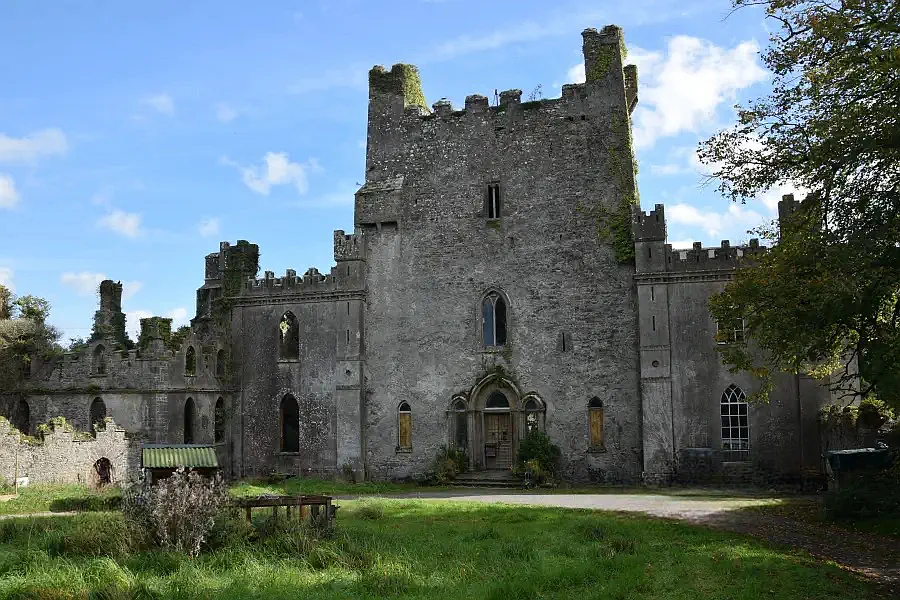
Image by Greg Mansfield
Location: Leap, Roscrea, County Offaly
Open: Monday through Saturday, 10:00am-5:00pm
Admission Fee: Yes
Parking: Free parking
Website: leapcastle.net
No paranormal enthusiast’s time in Ireland would be complete without visiting Leap Castle. This is because this ancient fortress has earned a dark reputation as Ireland’s most haunted castle. Some say it’s the most haunted place on Earth. Whether this is true or not, it’s an amazing place that’s drenched in bloody history and paranormal mystery.
The castle’s stones have witnessed centuries of murder, betrayal, and terrible cruelty. Today, visitors come here to step back in time and, if they’re fortunate, experience some of the paranormal activity that still echoes through its rooms.
Leap Castle’s story started long before the medieval masons laid its first stones. The land the fortress stands on was sacred to the ancient Druids, and some believe this spiritual connection still influences the castle today.
The castle was built around 1250 AD, and locals called it Leim Ui Bhanain, or “Leap of the O’Bannons.” This name came from a brutal tradition. According to legend, two O’Bannon brothers once leaped from a rocky cliff to prove their strength. The survivor became clan chieftain.
Later, the powerful O’Carroll clan took control of Leap Castle and made it their main stronghold. The O’Carrolls were known throughout Ireland for their ruthless ways and constant fights for power within their own family. Under their rule, the castle became a place of terrible violence.
The most horrifying event in Leap Castle’s history happened in 1532. When Mulrooney O’Carroll died, his two sons fought viciously over who would lead the clan next. One brother, Thaddeus, was a Catholic priest. One day, Thaddeus stood at the altar in the castle chapel, high inside the tower, celebrating mass for his family. His brother Teighe stormed into the sacred space and, without warning, drew his sword and ran it through Thaddeus. The priest collapsed across the altar, bleeding to death as his family watched in horror. That room is now called the Bloody Chapel.
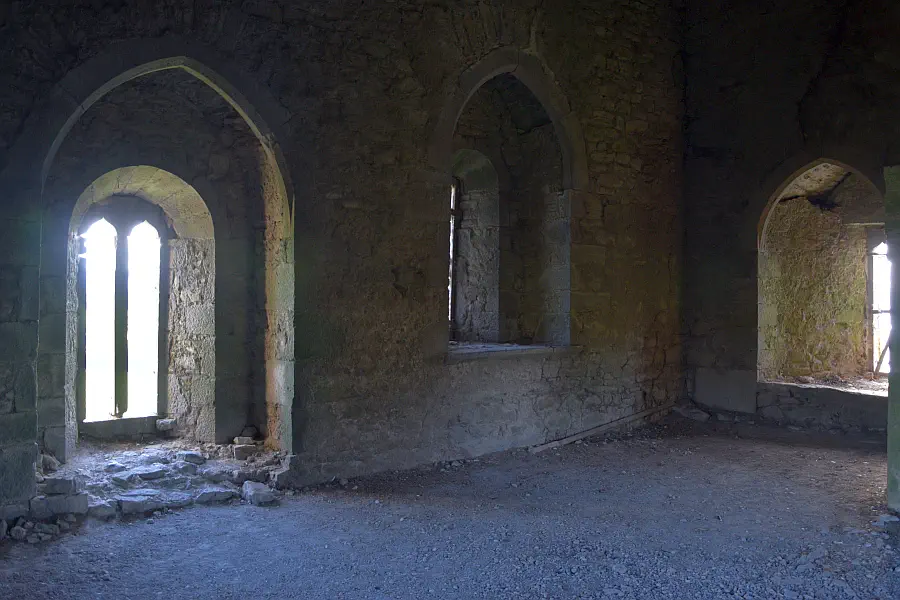
Image by Greg Mansfield
The O’Carrolls didn’t limit their cruelty to family feuds. In 1599, Charles O’Carroll hired soldiers from the MacMahon clan to fight for him. After a victory celebration, O’Carroll had his men murder the MacMahons while they slept. He then disposed of their bodies in the castle’s most terrible feature—an oubliette hidden behind the Bloody Chapel.
The word oubliette comes from French and means “to forget.” The O’Carrolls designed this death trap with cruel precision. They threw prisoners and anyone who crossed them down a shaft. At the bottom waited a bed of iron spikes. If the fall and the spikes didn’t kill them right away, they were left to die slowly in the darkness. No one would hear their screams or care to remember they were there.
When workers cleaned out the oubliette in the early 1900s, they made a gruesome discovery. They hauled out three cartloads of human bones. The total number of people who died in that pit will never be known.
In 1642, the Darby family became the new owners of Leap Castle. Centuries later, Mildred Darby would bring the castle’s hauntings to worldwide attention. Mildred was a writer who loved Gothic stories and the supernatural. She held séances in the castle in the early 1900s and carefully documented the spirits she encountered. Her accounts fascinated readers across Europe and America.
During the Irish Civil War in 1922, raiders looted Leap Castle and set it on fire. After that, the fortress sat in ruins for nearly 70 years. Then, in the early 1990s, Sean and Anne Ryan purchased it. Since then, they’ve worked long and hard to restore it.
Among all the haunted places in Ireland, Leap Castle stands apart because of one entity. People call it “the Elemental” or simply “It.” This creature is not a human ghost. Many believe it formed from centuries of violent deaths and occult rituals. It can change its shape and brings pure terror to anyone who senses its presence.
Mildred Darby wrote about her encounter with the Elemental in the Occult Review. She felt something touch her shoulder. When she turned, she saw a grey shadow about the size of a sheep. It had a face that was almost human but horribly wrong. Where eyes should be, there were only black holes. The worst part wasn’t what she saw, it was the smell. The Elemental brought with it a sickening stench of rotting flesh and sulfur.
The Elemental isn’t alone. Many other ghosts inhabit Leap Castle. Thaddeus O’Carroll, the murdered priest, never left the Bloody Chapel. Visitors see him on the chapel stairs and wandering the room where he died. Even after the castle burned in 1922, people reported seeing bright lights shining from the chapel windows late at night. At the time, the building was a complete ruin with no electricity, but the lights appeared anyway.
A tall woman in red roams the castle carrying a dagger. Some see her as a sad figure. Others find her threatening. Her story is one of the darkest at Leap Castle. The O’Carrolls captured her, assaulted her, and murdered her baby. In her grief and despair, she took her own life with the dagger she still carries.
Two young girls—Emily and Charlotte—haunt the main hall. Some hear them playing, laughing, and sometimes crying. The sounds are so clear that people think living children are in the castle. Emily’s spirit is especially tragic. Witnesses see her fall from the castle battlements, plummeting toward the ground. She vanishes just before impact, only to appear again and repeat her fatal fall.
Today, the Ryans continue their restoration work while respecting the castle’s history and ghosts. They’ve done a great deal to restore the main hall and upper floors of the tower. But a serious injury to Sean’s knee forced him to slow down.
Sean talks openly about the paranormal activity at Leap Castle. He doesn’t fear the spirits. Instead, he believes they have as much right to be there as he and Anne do. After all, many of them died within these walls. It’s their home too.
Anne is an expert on Leap Castle’s history and provides guided tours that include the Bloody Chapel. She told me that she and Ryan hear the sound of people talking in remote parts of the castle when they (the Ryans) are the only ones around. In addition, they hear doors slamming in various parts of the tower. This is more startling when you learn how difficult it is to open some of those old doors!
Due to its reputation as being horrifically haunted, a visit to Leap Castle was on my bucket list for a long time. I just had to visit, and so should you. Not just for the ghosts, but also to meet and pay respect to the Ryans for all that they’ve done for this remarkable place.
Recommended
Books